The challenges in the restaurant industry are diverse—and no two businesses are alike. Successful kitchens rely on customized solutions rather than one-size-fits-all approaches. That’s why we support you with personalized, practical, and data-driven recommendations.
Solutions for 2026: An Analysis of the Challenges Facing Modern Professional Kitchens.
Global foodservice insights meet your practical needs: Get your free survey now and request a customized kitchen concept.
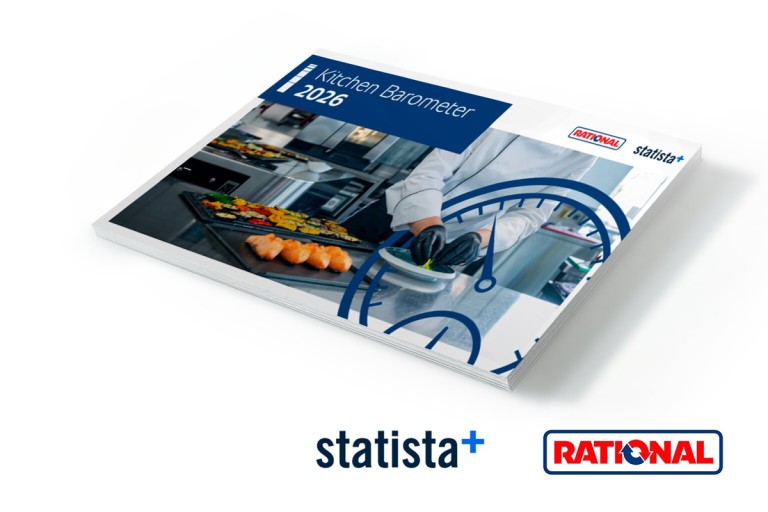
Restaurant and hotel kitchens are under enormous pressure: Staff shortages, rising costs, and volatile supply chains make day-to-day operations difficult, while guests expect the highest quality. Growing challenges require well-informed decisions—the Kitchen Barometer provides valuable background information to help with this. Our approach provides individualized recommendations based on your inputs.
Request the survey and kitchen concept for free:
Five topics in focus: what moves kitchens today.
Sustainability, shortage of skilled workers, operational costs, digitalisation and quality assurance.
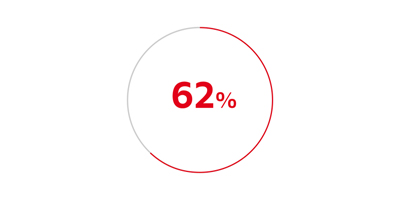
notice that guests are increasingly attaching importance to sustainability. 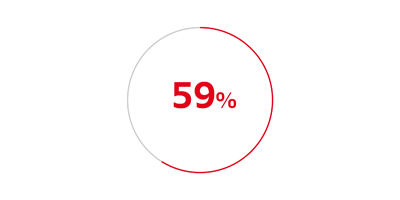
see the shortage of skilled workers as the biggest challenge. 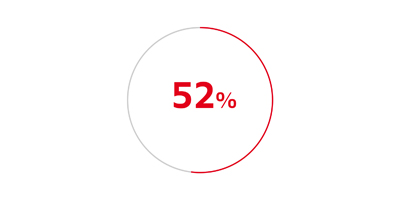
report significantly increased energy costs. 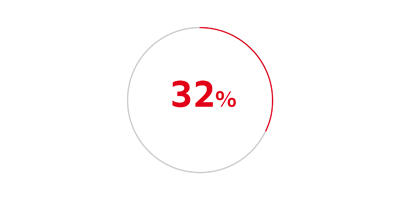
already benefit from digital HACCP documentation. 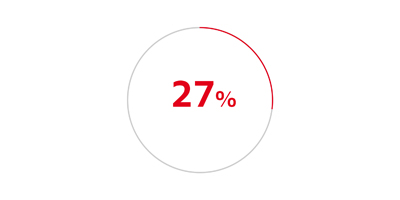
notice a decline in the quality and consistency of food preparation due to a shortage of skilled workers.
Get started now: Find a customized solution for your kitchen in 30 seconds.
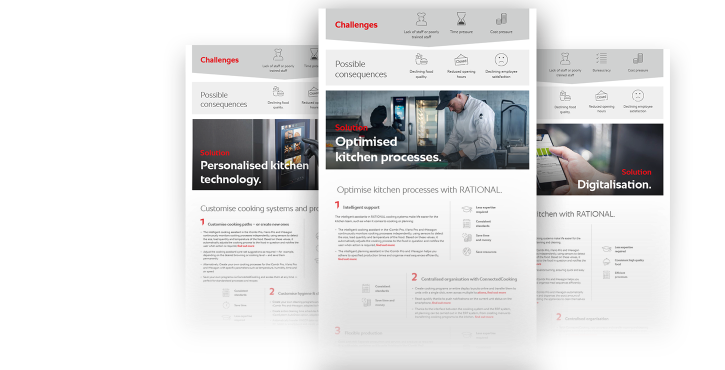
What are your biggest challenges?
Request your personalized proposal now—free of charge and with no obligation.
What the experts say.
Reliable data instead of gut feelings.


Read the study online or download it.
Frequently Asked Questions.
What is the Kitchen Barometer 2026?
The Kitchen Barometer 2026 is a data-driven study by RATIONAL and Statista examining the current state of restaurant and hotel kitchens, with a particular focus on costs, sustainability, skills shortages, quality assurance, and digitalisation.
Who was surveyed - and how large is the sample?
250 decision-makers from restaurant and hotel kitchens in five markets (Germany, France, Japan, the United Kingdom and the USA) were surveyed.
What topics does the Kitchen Barometer 2026 cover?
The study analyses five topic areas: operating costs, sustainability, skills shortages, quality assurance and digitalisation.
Which external factors will have the greatest impact on the catering industry in the next 12 months?
Respondents most often expect rising energy prices (67%), followed by inflation or a generally rising price level (63%) and a lack of skilled workers (59%).
What costs have increased the most in the catering industry over the past year?
Globally, respondents most frequently reported a sharp increase in the cost of food/commodities (56%) and energy (52%); Many also mention packaging/logistics (50%) and personnel costs (44%).
What role does sustainability play in professional kitchens?
For 67% of respondents, sustainability is either central or important. In addition, 62% of respondents report an increased demand from guests for sustainable products and processes.
Which sustainability measures are the most widespread in the catering industry?
Of kitchens that prioritise sustainability, 87% focus on reducing food waste, 84% on disposal/recycling and 83% on regional/seasonal products.
How much is the skilled worker shortage affecting kitchen operations?
64% of kitchen operators report that the shortage of skilled workers has had a significant impact in the last 12 months. The most common consequences: higher workload (57%), and longer waiting times for guests (39%).
How are catering companies specifically tackling staff shortages?
The most frequently implemented measure was employee retention (50%). Other approaches include the optimisation of kitchen logistics/layout (34%) and recruitment measures (32%).
How do kitchens ensure quality despite volatility and staff shortages?
The most common measures are quality checklists/internal audits (61%) and training courses at headquarters (61%). In addition, 52% rely on multifunctional/intelligent kitchen technology to standardise processes.
To what extent are restaurant and hotel kitchens using digital technology?
Almost all respondents (98%) use digital systems in some form. At the same time, only 35% are fully networked, 46% are partially networked and 17% work mainly with individual solutions.
Which digital applications are most commonly used in kitchens?
Those most often mentioned are digital ordering & POS systems (48%), digital shift/personnel planning (43%) as well as kitchen management/production control (34%) and digital recipe standardisation (34%).
In which areas do users see the greatest benefit of digital solutions?
Among users, 86% report substantial benefits from kitchen management/production control, and 85% report benefits from automated inventory/warehouse management.
What areas do kitchens want to invest in over the next 12 months?
Planned investments are particularly frequent: Modernisation of kitchen technology (78%), Training & Development (77%), extended food safety measures (76%) and energy-efficient equipment (75%).
Kitchen appliances for catering and commercial kitchens.
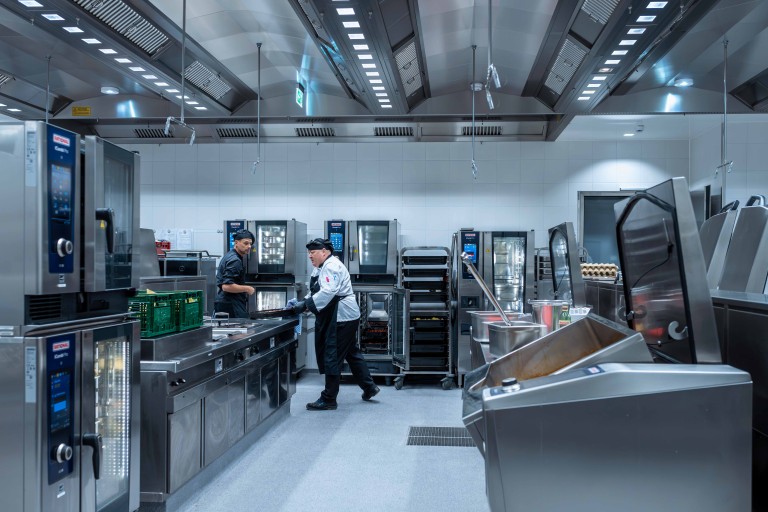
You don't need lots of appliances to equip a professional catering kitchen perfectly. RATIONAL offers equipment that combines several conventional commercial kitchen appliances: For example, the iCombi Pro combi steamer and the iVario Pro multifunctional cooking system can together cover up to 90% of conventional cooking applications, depending on the kitchen concept and operational requirements. Combined with the ConnectedCooking digital kitchen management system, kitchen processes can be managed and monitored digitally.