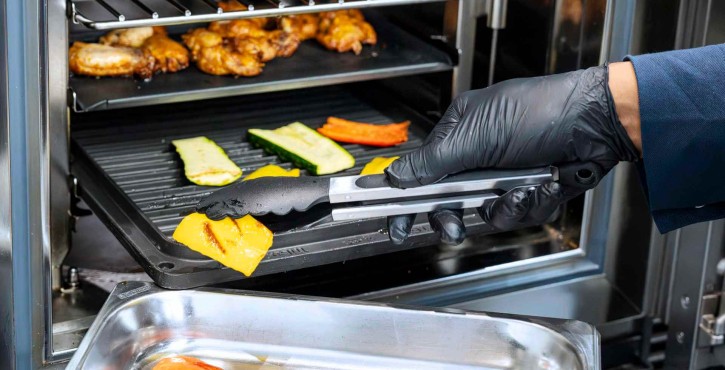
Microwaves are electromagnetic waves that interact primarily with water and fat molecules in food. As these molecules vibrate, heat is generated inside the product itself rather than being transferred only through hot air or metal surfaces. This allows food to warm more quickly and spend less time in the cooking chamber, an important factor for maintaining moisture and texture.
Cook RATIONAL – 2026-04-30
Microwave technology has played a role in professional food preparation for decades, yet how it works – and how it should be used – often remains unclear. In modern commercial kitchens, microwave energy is no longer about speed alone. Used correctly, it supports food quality, efficiency, and consistency by transferring energy directly to the product.

How Microwave Energy Works in Food.
A common misconception is that microwaves cook food from the inside out. In reality, microwave penetration is limited to the outer layers of the product. From there, heat continues to move inward through conduction. This is why microwave technology works best when combined with other forms of heat instead of being used in isolation.
Food composition has a direct impact on microwave effectiveness. Water plays a key role by absorbing energy and regulating temperature, helping prevent food from exceeding the boiling point until moisture evaporates. Fat absorbs microwave energy efficiently and can reach higher temperatures, while salt and frozen ice crystals may reduce penetration. Dense foods behave differently than porous foods, making controlled energy use essential.
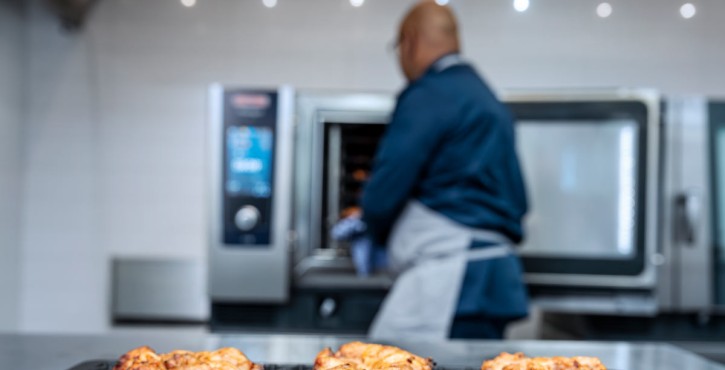
When microwave energy is coordinated with convection heat and steam, food reaches target temperatures faster while spending less time exposed to overall heat. This improves consistency and reduces dehydration. The goal is not to replace traditional cooking methods, but to support them exactly when needed.
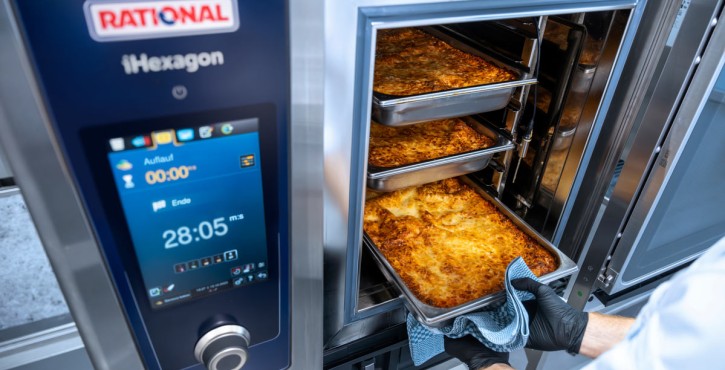
A Precision Tool, Not a Shortcut.
In modern food preparation, microwave energy is not a shortcut; it is a controlled, purposeful tool that works in harmony with the rest of the cooking process. When understood and applied correctly, microwave technology becomes a precise form of energy management. It shortens cooking times, supports product quality, and enables predictable results across different foods and load sizes.